

Connecting Island families to specialists through mentorship and virtual collaboration
Martha’s Vineyard is a picturesque island just seven miles off the coast of Massachusetts, long celebrated as a relaxed summer destination. But the island’s true heart belongs to the people who remain when the ferries slow and the beaches empty. In winter, the Vineyard transforms from a bustling tourist hub into a quiet, close-knit community.
According to the Martha’s Vineyard Chamber of Commerce, about 23,000 residents live on the island year-round, a number that swells to 200,000 during peak summer months. For many of these families, however, reliable access to specialty healthcare is far from certain. The nearest pediatric hospital requires both a ferry ride and a lengthy drive inland, and residents are sometimes navigating seasonal employment, gaps in insurance coverage, and language barriers.
While Massachusetts has 37 federally qualified health centers, Martha’s Vineyard has just one: Island Health Care (IHC). Founded in 2002, IHC provides care regardless of a patient’s insurance status or ability to pay, and according to the Vineyard Gazette, they serve more than 10 percent of the island’s year-round population.
For IHC pediatric nurse practitioner Jenna DelSapio, these realities of specialty healthcare shape every patient encounter.
After years in orthopedics at Seattle Children’s Hospital, she moved to the Vineyard with her family. In Seattle, hallway consults, second opinions, and shared cases were part of the everyday rhythm of care. On the 96-square-mile island of Martha’s Vineyard, collaboration looks very different.
“What I’ve needed most is someone I can ask questions to or review cases with,” DelSapio says.
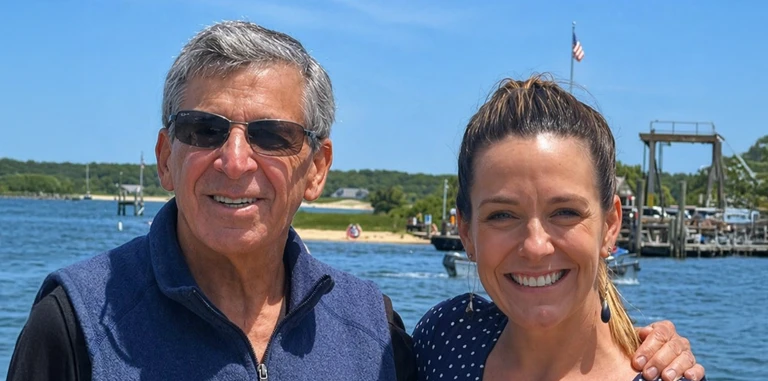
Everything shifted when a colleague told her about the MAVEN Project. She signed up immediately and was paired with Dr. Kenneth Spiegelman, a 40-year pediatric veteran, Medical Director of Continuing Medical Education at Connecticut Children’s Medical Center, and MAVEN mentor.
Spiegelman volunteers not only to give back and stay engaged in the medical field, but also because he sees great value in MAVEN’s model of creating a supportive care network that extends to clinicians everywhere.
“Mentorship isn’t just about clinical answers,” he explains. “It’s also about navigating administration, managing people, and handling the everyday challenges of a busy clinic.”
For DelSapio, one of the biggest hurdles is practicing “island medicine.” Transporting patients off the Vineyard for specialty care is difficult, so she relies on resources, such as MAVEN, to explore ways to manage care locally. Through virtual consultations, she can discuss complex cases without requiring patients to travel off-island.
“My friends and family all know that I regard my MAVEN mentor as one of the absolute best parts of my job,” DelSapio said.
DelSapio and Spiegelman meet monthly online, with Spiegelman also available by phone for urgent questions. Last summer, they even met for lunch, a testament to how naturally the mentorship has developed into a friendship.
Their collaboration directly benefits patient care on the island. Many Vineyard families face significant barriers. With roughly 20 percent of the year-round population being Brazilian according to Martha’s Vineyard Times, many families contend with language differences, in additional to seasonal employment, and limited or no insurance. Traveling off-island for specialty care is often prohibitive, requiring time off work, ferry tickets, and a long journey.
Through MAVEN, DelSapio can consult pediatric specialists virtually, completing most of the diagnostic work locally. This approach allows her to determine whether an off-island referral is truly necessary, making care more accessible and efficient for her patients while enhancing her own clinical skills.
“Not only have I been able to review specific labs and exam findings with a provider, but I’ve also learned in the process, improving my future medical decision-making,” she said. “I’ve had nothing but the best experience.”
Spiegelman sees that learning curve as MAVEN’s quiet superpower. When specialty knowledge travels directly to the point of care, frontline clinicians become more confident distinguishing what is urgent, what is routine, and what can safely remain in primary care. In remote settings, that confidence is invaluable. Over time, the collaboration builds islands of capability on literal islands, enabling clinicians like DelSapio to practice with both autonomy and backup.
On Martha’s Vineyard, where distance, language, and socioeconomic barriers intersect, capability becomes a form of equity. By reducing unnecessary referrals and ensuring essential ones are targeted, MAVEN shortens the path between concern and care, making specialized pediatrics feel far less distant.
“In a clinic like mine, isolated and far from a pediatric hospital with specialists, MAVEN is a network I can rely on to ensure my patients receive the best possible care from me.”